
Plot Investment vs Apartment Investment: Which Gives Better Returns?
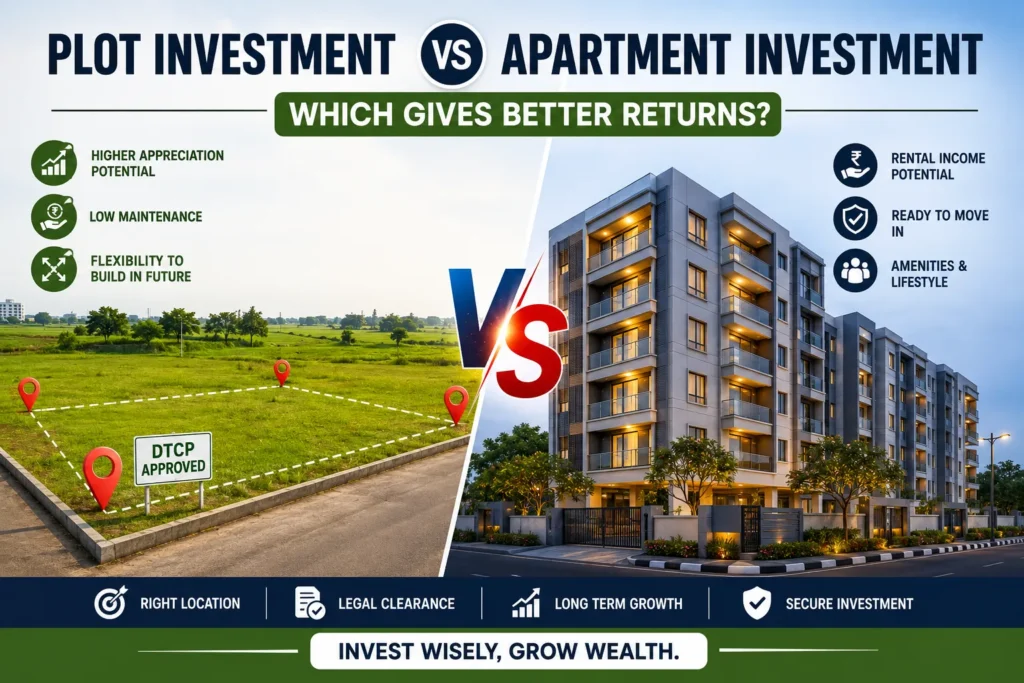
Investing in real estate is one of the most reliable ways to build long-term wealth. However, one question continues to challenge first-time buyers and seasoned investors alike: Should you invest in a plot or an apartment?
Both options have unique advantages, and the right choice depends on your financial goals, investment horizon, risk tolerance, and future plans. While some investors prioritize rental income, others focus on capital appreciation and long-term asset growth.
This guide explores the key differences between land and apartment investments, helping you make an informed decision based on practical factors rather than market hype.
Plot Investment vs Apartment Investment: Key Differences Explained
Understanding the Two Investment Options
Before comparing returns, it’s important to understand how each asset works.
What is Plot Investment?
Buying a plot means purchasing a piece of land, usually in a residential or commercial layout. Investors either hold it for future appreciation or construct a property later.
Plots are generally available in developing suburbs, growth corridors, and newly approved layouts.
Common Uses
- Residential construction
- Commercial development
- Long-term investment
- Asset diversification
What is Apartment Investment?
An apartment is a ready-built residential unit within a gated community or standalone building.
Apartments provide immediate usability, whether for self-occupation or rental income.
Typical benefits include:
- Ready-to-move property
- Rental potential
- Community amenities
- Easier financing
Plot vs Apartment: A Quick Comparison
| Factor | Plot | Apartment |
|---|---|---|
| Capital Appreciation | Generally Higher | Moderate |
| Rental Income | Not Available | Immediate Income |
| Maintenance Cost | Very Low | Regular Maintenance Charges |
| Construction Required | Yes (Later) | No |
| Depreciation | Land Doesn’t Depreciate | Building Depreciates Over Time |
| Loan Availability | Available (conditions apply) | Easily Available |
| Liquidity | Depends on Location | Usually Easier in Cities |
| Customization | Complete Freedom | Limited |
Which Investment Appreciates Faster?
One of the biggest reasons investors prefer land is long-term appreciation.
Land is a limited resource. As cities expand and infrastructure improves, demand for strategically located plots often increases significantly.
Major growth drivers include:
- New highways
- Metro rail projects
- IT parks
- Industrial corridors
- Educational institutions
- Commercial developments
These developments can substantially improve land value over time.
Apartments also appreciate but generally at a slower pace because the building structure depreciates as it ages.
Rental Income: Where Apartments Have an Advantage
If your goal is generating monthly cash flow, apartments usually perform better.
Rental income can help:
- Cover EMI payments
- Create passive income
- Improve overall investment returns
Plots do not generate rental income unless they are developed.
Therefore, investors seeking regular earnings often prefer apartments.
Maintenance Responsibilities
Maintenance costs directly affect investment returns.
Plot Owners Usually Spend Less
Since vacant land has minimal upkeep, owners typically avoid expenses such as:
- Association charges
- Lift maintenance
- Building repairs
- Common area maintenance
Apartment Owners Face Ongoing Expenses
Regular costs include:
- Monthly maintenance fees
- Repairs
- Painting
- Plumbing
- Electrical maintenance
- Society charges
These expenses should be considered while calculating long-term profitability.
Long-Term Wealth Creation
Many experienced investors choose land primarily because of its appreciation potential.
Land offers:
- Scarcity-driven value
- Flexible future development
- Lower ownership costs
- Better inflation protection
However, choosing the right location remains critical.
Poorly connected areas may take years to appreciate.
Apartment Investments Offer Lifestyle Benefits
Apartments provide benefits beyond financial returns.
These include:
- Security
- Community living
- Amenities
- Convenience
- Immediate occupancy
Families often prefer apartments because they are ready to use without waiting for construction.
Important Factors That Influence Returns
Regardless of the property type, returns depend on several variables.
1. Location
Properties near employment hubs, transportation projects, schools, and hospitals generally perform better.
Growing suburban regions often provide stronger appreciation opportunities.
2. Legal Approval
Always verify:
- DTCP Approval
- CMDA Approval
- RERA Registration (where applicable)
- Clear ownership documents
- Encumbrance Certificate
Legal clarity protects your investment and improves resale value.
3. Infrastructure Growth
Upcoming infrastructure often has a major impact on future prices.
Examples include:
- Ring roads
- Railway expansion
- Metro connectivity
- Industrial parks
- Commercial centers
4. Builder or Developer Reputation
Choose developers with:
- Transparent documentation
- Proven delivery history
- Positive customer feedback
- Quality developments
Reliable developers reduce investment risk.
Common Mistakes Investors Should Avoid
Many buyers make emotional decisions instead of informed ones.
Avoid these common mistakes:
- Buying only because prices seem low
- Ignoring legal verification
- Overlooking future infrastructure
- Focusing only on rental income
- Investing without understanding market demand
- Choosing locations with poor connectivity
Professional guidance can help avoid expensive mistakes.
Cost Considerations
Your budget also influences the right investment choice.
Plot Investment Costs
- Land registration
- Documentation
- Site development
- Boundary fencing (optional)
Construction can be planned later based on financial readiness.
Apartment Costs
- Purchase price
- Registration
- GST (where applicable)
- Interior work
- Maintenance deposits
- Monthly association fees
Calculate the total ownership cost rather than considering only the purchase price.
Which Option Suits Different Buyers?
| Buyer Type | Better Choice |
|---|---|
| Long-Term Investor | Plot |
| Rental Income Seeker | Apartment |
| First-Time Home Buyer | Apartment |
| Future Home Builder | Plot |
| Wealth Preservation | Plot |
| Immediate Living | Apartment |
Real-World Perspective
There isn’t a universal answer.
Many experienced investors maintain a balanced portfolio.
For example:
- Apartments generate monthly income.
- Plots build long-term wealth.
The best strategy depends on personal financial goals rather than market trends.
Buying Property in Chennai?
For buyers looking across Chennai, rapidly developing areas such as Tambaram, Guduvanchery, Urapakkam, Maraimalai Nagar, Kilambakkam, and Padappai continue to attract attention because of improving infrastructure and residential demand.
Professionals serving clients across Chennai often recommend evaluating connectivity, legal approvals, and future development plans before making any investment decision.
Frequently Asked Questions
1. Which gives better long-term returns: a plot or an apartment?
Land generally offers stronger capital appreciation over a longer period, especially in developing locations.
2. Is buying a plot safer than buying an apartment?
Both can be safe investments when legal documents are verified and the property is purchased from a trustworthy developer.
3. Which investment generates monthly income?
Apartments can provide rental income immediately after purchase, while vacant plots usually do not.
4. Does land require maintenance?
Compared to apartments, vacant plots require very little maintenance, making ownership simpler.
5. Can I build a house later after purchasing a plot?
Yes. One major advantage of buying land is the flexibility to construct according to your budget and future requirements.
6. Which option is better for first-time investors?
It depends on individual goals. Buyers seeking regular income may prefer apartments, while long-term investors often consider land.
Conclusion
Choosing between land and an apartment isn’t about finding a universally better investment—it’s about selecting the option that aligns with your financial objectives.
If your priority is steady rental income and immediate usability, an apartment can be a practical choice.
If you’re focused on long-term appreciation, flexibility, and wealth creation, a well-located plot may offer stronger growth potential over time.
Before making any decision, evaluate legal approvals, infrastructure development, connectivity, and your long-term financial plan. Consulting experienced real estate professionals can also help you assess opportunities more confidently and reduce investment risks.
10 Mistakes First-Time Property Buyers Should Avoid in Chennai
Plots for Sale in Urapakkam: A Smart Buyer’s Guide (2026)
Home Loan for Plot Purchase : Eligibility, Documents & Process Explained